

It’s a familiar feeling. A sudden jolt of inspiration strikes, and you’re filled with a powerful urge to act. You decide this is the day you’ll start writing that book, launch that business, or finally commit to a fitness routine. This is motivation, and it feels incredible.
But what happens tomorrow? Or the day after, when you’re tired, the initial excitement has faded, and the sofa looks far more appealing than your to-do list?
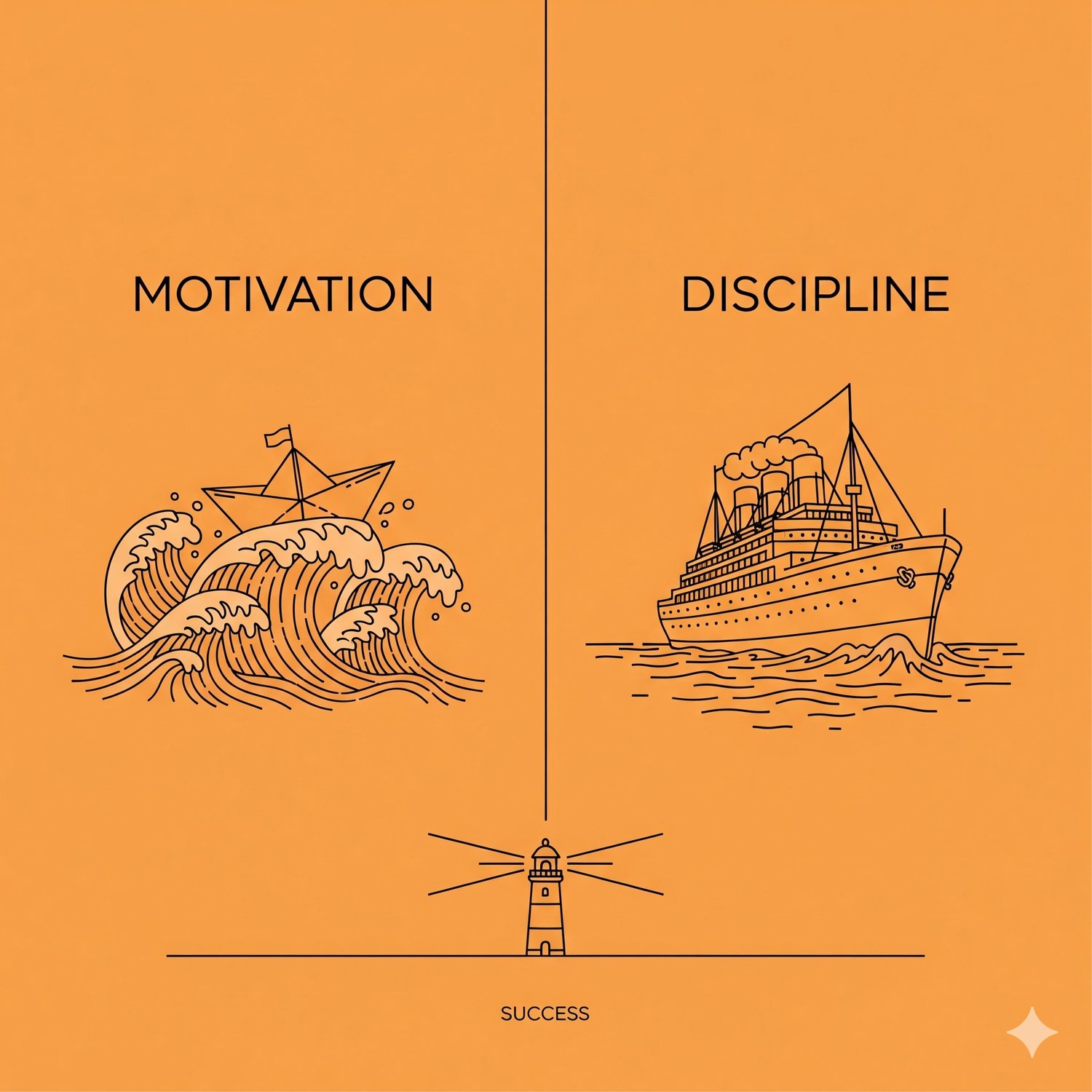
This is the fundamental problem with relying on motivation. It’s a fleeting emotion, not a strategy. As the image perfectly illustrates, a week powered by motivation is a series of inconsistent peaks and valleys. A week powered by discipline, however, produces steady, reliable results.
The Motivation Trap
The top chart in the image represents a life run by motivation. It’s an emotional rollercoaster. On a “good” day, your output is incredible. You make huge strides and feel unstoppable. On a “bad” day, you do nothing, waiting for that magical feeling to return.
When you rely on motivation, you are outsourcing your success to your mood. You’re essentially telling yourself, “I will only work on my goals when I feel like it.” This is a recipe for stalled projects and abandoned dreams.
The Power of Discipline
Now, look at the bottom chart. This represents discipline. It’s not about intensity; it’s about consistency. Discipline is the choice to show up regardless of how you feel. It is a system, not a feeling.
Discipline is what gets you to the gym when you’re tired. It’s what makes you write one page when you feel uninspired. It’s the commitment you made to your future self, and it’s about honoring that promise. While motivation gives you a powerful but temporary push, discipline builds the engine that will carry you forward long after the initial spark has died down.
How to Build Discipline Over Motivation
Shifting from a reliance on motivation to a foundation of discipline is a conscious choice. Here’s how to start:
- Stop Waiting for the Feeling: Acknowledge that you are not always going to be motivated, and that’s completely normal. The goal isn’t to feel good about the task; it’s just to do it.
- Make It a Habit, Not a Choice: The more you have to decide whether or not to do something, the more chances you have to talk yourself out of it. Automate the behavior by setting a specific time and place for it.
- Start Absurdly Small: Instead of relying on a huge burst of motivation to get a big task done, commit to a “micro-ripple” — an action so small it’s almost impossible not to do it. Want to work out? Just put on your gym clothes. Want to write? Open your laptop and write one sentence.
Motivation is what gets you started, but it’s discipline that sees you through to the finish line. Stop waiting for the spark and start building the engine.